
DJ PRODUCER & SOUND ENGINEER
InstagramThreadTick-tockfacebookmessenger facebookwhatsappdiscordslackkickbeamstreamrumbletwitchmixcloudsoundcloudtuneFMspotifydeezertidalitunes/applemusicamazon musicyoutubedigitaldjpoolBPM-SupremeThrone
 My Wishlist

Articles

The Music Industry Needs an XR Performance Licence Before Innovation Moves Elsewhere

Submitted by DJTOTYGEE on
Image
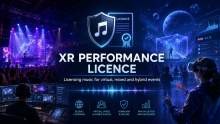
XR Performance Licence
Virtual and mixed-reality music performances are no longer theoretical. DJs can already learn on accurately modelled club equipment, perform in social VR spaces, stream sets to external audiences, and combine music with interactive visuals, avatars, and spatial environments. Platforms such as Tribe XR demonstrate that the technology is moving from experimentation towards a credible creative and educational ecosystem. However, the UK’s music-licensing framework has not yet developed an equally clear route for the people creating these experiences. PRS for Music, PPL and PPL PRS now have an opportunity to lead: create a transparent, accessible licence designed specifically for fully online XR performances and hybrid physical–virtual events. Existing licences cover parts of the experience — but not the whole The problem is not that music used in XR exists outside copyright. Rights still apply. TheMusicLicence already covers the public performance of live and recorded music in many physical venues and events. PRS also provides different licensing routes for online services, streaming, mechanical uses and synchronisation. Official guidance recognises that businesses may require separate permission when using music online or through mobile technologies. The difficulty is that an XR event may involve several uses at once: a DJ performing to people inside a physical venue; remote guests attending as avatars; music transmitted live across international borders; interactive and audio-reactive virtual environments; commercial sponsorship or ticketing; recordings, clips and on-demand replays; music combined closely with persistent visual content; audience and track-use data generated by the platform. A physical public-performance licence may cover one part of that activity. A digital or communication-to-the-public licence may cover another. Recording, copying or synchronising music with visual material may introduce further permissions. What is missing is a clear, recognisable route that tells an organiser: “This is the licence you need for an XR music event, this is what it covers, this is what it costs, and this is how royalties will be reported.” I could not identify a publicly advertised, standard UK licence that bundles these elements specifically for an XR nightclub, immersive DJ performance or mixed-reality music event. PRS has discussed the implications of virtual and augmented reality since at least 2017, and has previously cited licensed VR services such as MelodyVR. The conversation has therefore already begun; the next step should be a practical product for creators and organisers. Why clarity matters: the Marc Kearns case A recent copyright prosecution provides a useful reminder of why legitimate, understandable licensing routes matter. Public reporting indicates that Marc Kearns, also reported as Mark in some secondary coverage, was sentenced at Hull Crown Court on 11 June 2026 after pleading guilty to multiple copyright offences connected with producing and selling unauthorised remix CDs. Reports say he received a 26-month custodial sentence suspended for 18 months, was ordered to complete 250 hours of unpaid work, and was required to pay more than £21,000. The most detailed account identifies this as £21,885 in prosecution costs. A financial analysis reportedly estimated approximately £220,979 in sales receipts. That case concerned the commercial manufacture and sale of infringing physical products. It is not legally equivalent to a licensed DJ performance in XR, and it should not be presented as though every remix or online set creates the same criminal liability. Nevertheless, it illustrates an important principle: creative technology does not remove the need for permission when protected recordings and compositions are commercially reproduced, distributed or exploited. The lesson should not simply be “do not innovate”. It should be: Make legal innovation easier than infringement. Creators need to understand where performance ends, and reproduction, adaptation, synchronisation or commercial distribution begins. Rights holders need accurate reporting and fair payment. Platforms and promoters need a licence they can actually identify and purchase. The opportunity for PRS and PPL An XR licence should not replace existing music rights. It should package them more clearly for a new kind of event. A practical framework could offer two main options. 1. Fully virtual XR performance This could cover a live music or DJ event delivered entirely through a virtual platform, with no audience physically present at the performance location. The tariff could consider: ticket revenue or subscriptions; sponsorship and advertising; audience size; UK-only or international availability; live-only access or a limited replay window; commercial versus educational or community use. 2. Hybrid physical and XR performance This would cover an event with both an audience inside a licensed venue and remote participants entering through VR, desktop or mobile platforms. The licence could serve as an XR extension to TheMusicLicence, rather than forcing organisers to obtain several unrelated permissions separately. Optional additions could address: on-demand recordings; promotional clips; branded immersive environments; closer synchronisation of music and pre-produced visuals; user-generated recordings; multi-territory access. Not every right can necessarily be cleared through one collective licence, particularly where direct permission from record labels, publishers or other rights owners is required. A useful XR framework should make those exclusions explicit instead of leaving organisers to discover them after an event has been designed. Better reporting could benefit rights holders XR platforms are digital by nature. Unlike many physical events, they can potentially generate accurate information about: which tracks were played; how long they were used; how many people attended; where audiences joined from; whether the event was live or replayed; ticket and subscription income; levels of audience interaction. This creates an opportunity for more accurate royalty distribution. Rather than relying only on estimated attendance or manually submitted set lists, PRS and PPL could establish a standard reporting format or application programming interface for XR platforms. Platforms such as Tribe XR and future virtual venues could then provide structured usage data subject to suitable privacy protections. The result could be a system that is not only simpler for organisers, but also more transparent for songwriters, composers, performers, labels and publishers. Start with a pilot, not a perfect universal solution The industry does not need to solve every possible metaverse use before acting. PRS, PPL and PPL PRS could begin with a voluntary pilot involving: one or two XR music platforms; independent DJs and promoters; rights-holder representatives; educational providers; a small number of hybrid venues; technology and accessibility specialists. The pilot could test a simplified tariff for limited live events, with clear attendance, revenue and track-reporting requirements. It should also recognise that XR has potential beyond commercial nightlife. Immersive performance can improve access for people who cannot easily enter conventional venues because of disability, geography, caring responsibilities, cost or anxiety. A proportionate community or educational tariff could encourage responsible experimentation without imposing the same cost structure as a major commercial festival. Why action is needed now Virtual nightlife is unlikely to replace physical clubs completely. The more realistic future is a combination: conventional venues enhanced by XR layers; remote guests participating alongside physical audiences; fully virtual performances for global communities; educational rehearsals becoming public showcases; DJs working increasingly as performers, broadcasters and immersive-experience designers. Technology companies are already building these environments. DJs and audiences are already experimenting inside them. If licensing remains fragmented, innovation may move towards closed catalogues, royalty-free music, direct deals available only to large platforms, or jurisdictions that provide clearer frameworks. That would be a missed opportunity for the UK music industry. PRS and PPL have historically adapted to new formats, from broadcasting and online streaming to contemporary public-performance licensing. An XR performance licence would be a continuation of that role—not a departure from it. Conclusion: licence the future rather than leaving it in a grey area The purpose of a new XR licence should not be to weaken copyright protection. It should do the opposite. It should give creators a practical legal route, give rights holders clearer reporting and revenue, and give platforms confidence to invest in legitimate immersive music experiences. The Marc Kearns case shows the consequences of commercially exploiting protected music without the necessary permissions. The growth of Tribe XR and other immersive platforms shows where music performance may be heading next. Between enforcement and innovation, there must be a clear licensing bridge. PRS for Music, PPL and PPL PRS are in the strongest position to build it. Proposed name The XR Music Performance Licence Covering: fully virtual live music and DJ performances; hybrid physical and XR events; optional recording and replay rights; clear guidance on synchronisation and excluded rights; platform-based track, attendance and revenue reporting. The technology is here. The audiences are forming. The creative community is ready. Now the licensing framework needs to catch up.
Published on
-- Category --: Articles
-@ @Threads @-: @PPL - @PRS - @PPLPRS - @The Music Licence - @Copyright

Tribe XR: Learning, Performing and Building the Future of DJing in Virtual Reality

Submitted by DJTOTYGEE on
Image
Tribe XR: Learning, Performing and Building the Future of DJing in Virtual Reality
Tribe XR is one of the clearest examples of virtual reality moving beyond entertainment and becoming a practical creative tool. Rather than treating DJing as a game, Tribe XR recreates the experience of learning and performing on professional club equipment inside a virtual environment. Users can practise mixing, attend live workshops, meet other DJs and perform online—without needing to own an expensive physical setup. From virtual DJ school to creative platform Tribe XR began with a straightforward mission: make professional DJ education more accessible. The platform allows beginners and experienced DJs to learn, practise and perform using realistic virtual equipment. It is available through Meta Quest, PC VR and Windows desktop mode, meaning a VR headset is not always required. A major milestone came in 2021, when Tribe XR partnered with AlphaTheta’s Pioneer DJ brand. This brought officially represented Pioneer DJ equipment into the virtual environment, giving users the opportunity to familiarise themselves with layouts and workflows similar to those found in professional DJ booths. This is important because the cost of buying or regularly accessing club-standard equipment can be a significant obstacle for new DJs. Tribe XR reduces that barrier by transforming a headset or computer into a virtual practice room. Learning through experience Traditional DJ education often relies on video tutorials. Tribe XR takes a more practical approach by placing the learner directly in front of virtual decks and a mixer. Its educational environment includes: Interactive lessons and guided practice Regular live workshops Access to mentors and experienced DJs Multiplayer sessions Community events and open-deck opportunities Practice on realistic virtual DJ equipment This makes Tribe XR more than a software simulator. It functions as a social learning environment where users can develop skills, receive feedback and build confidence before performing in public. Music libraries and streaming Tribe XR allows DJs to load their own music and supports several modern library workflows. Its documentation includes options for importing Rekordbox information, including playlists and performance data. It also offers connections to services such as Beatport and SoundCloud Go+, while Dropbox can be used in parts of the track-import workflow. These integrations help connect virtual practice with a DJ’s existing music collection. Instead of rebuilding every playlist inside a separate application, users can bring elements of their established preparation process into the virtual environment. There are still practical limitations. Streaming tracks may need to be analysed when loaded, and compatibility can vary between services and platform versions. Tribe XR should therefore be seen as a developing creative ecosystem rather than a complete replacement for every professional DJ workflow. Performance, visuals and streaming Tribe XR is not limited to private lessons. DJs can enter multiplayer rooms, perform for other users and create content for external platforms. The software supports spectator-camera and recording workflows, while PC VR users can connect visual tools such as Resolume through NDI and OSC. This creates possibilities beyond simple DJ practice: Livestreamed DJ performances Virtual back-to-back sets Online workshops and demonstrations Branded virtual showcases Hybrid physical and digital events Experimental XR club nights A DJ inside Tribe XR can therefore become part performer, part broadcaster and part virtual-stage designer. Can Tribe XR help shape future nightlife? The traditional nightclub is unlikely to disappear, but physical venues may increasingly be combined with digital participation. A future event could include a live audience inside a venue and a second audience entering through VR. Remote DJs might appear on virtual stages, while interactive visuals and digital environments react to the music. Tribe XR already demonstrates several elements of this future: virtual equipment, social rooms, remote performance, visual integration and community-led education. However, it is not yet a complete virtual-venue operating system. Large commercial events would still require careful planning around platform reliability, audience capacity, moderation, audio quality and rights management. Its strongest role today is as a bridge between learning, rehearsal, community and early immersive performance. The unresolved issue: music licensing in XR Technology is developing more quickly than the licensing systems around it. A conventional event in a UK venue normally operates within established public-performance licensing structures. A livestream may require a different rights arrangement, while combining recorded music with persistent visual content can introduce additional questions around synchronisation rights. An XR event could involve several uses at the same time: Music played to a physical audience Music transmitted to a remote audience Interactive participation inside a virtual world Branded visual environments Recording and replay after the event Audiences joining from multiple countries There is currently no widely understood, single “XR nightclub licence” covering every part of this model. The relevant rights have not disappeared, but the route through them remains fragmented. That uncertainty could become one of the greatest obstacles to the commercial development of virtual and hybrid nightlife. Conclusion Tribe XR matters because it shows that immersive DJing is no longer only an idea. It already provides realistic equipment simulation, structured education, multiplayer participation, streaming tools and visual-performance options. For new DJs, it lowers the cost of learning. For experienced performers, it provides a space to practise, experiment and reach audiences in new ways. The next stage will depend on more than better headsets or more realistic graphics. It will require reliable event infrastructure and clearer licensing arrangements for immersive performances. Tribe XR may not yet represent the finished nightclub of the future but it is already helping to build the path towards it.
Published on
-- Category --: Articles
-@ @Threads @-: @TribeXR - @AlphaTheta

Ferrari’s Electric Transition: Strategic Vision — and a useful lesson for DJs

Submitted by DJTOTYGEE on
Image
Ferrari’s Electric Transition: Strategic Vision — and a useful lesson for DJs
A silent Ferrari might sound like a contradiction — but it’s also a strategic statement. The Luce signals that electrification isn’t optional; it’s positioning in a market that won’t wait. It’s not about abandoning heritage, but defending relevance before disruption makes the decision for you. Ferrari’s first fully electric vehicle, widely referred to as the Luce, has sparked a familiar kind of debate: can a brand built on combustion drama translate its emotional identity into an electric era? The initial reaction has been mixed, with enthusiasts questioning the loss of the “roar” and investors reacting nervously in the short term. But the more interesting story isn’t panic — it’s positioning. Ferrari is innovating early, not reacting late Ferrari’s electrification isn’t a sudden swerve. It’s part of a longer arc in performance engineering and luxury positioning, with the Luce functioning as a high-profile statement about where Ferrari wants to compete next. The wider lesson is familiar: market leadership does not guarantee future relevance. Kodak invented early digital camera technology but hesitated to disrupt its film business — then the market moved without it. Nokia dominated mobile phones, but underestimated the shift towards software ecosystems after the iPhone. Blockbuster is another brutal case study: in 2000, Netflix’s founders approached Blockbuster with a proposal that would have effectively brought Netflix under Blockbuster’s umbrella (famously valuing Netflix around $50 million). Blockbuster declined — and within a decade the market had flipped. These examples aren’t perfect parallels, but they share a pattern: when disruption arrives, the biggest risk is rarely innovation — it’s inertia, and the belief that the old advantage will protect you forever. Ferrari, whether you love the idea or not, is choosing the opposite stance: move early, learn fast, and shape the narrative while it still can. The bigger issue: nightlife and DJ culture may be next This is where I think the conversation becomes urgent for the creative industries — especially DJs and venues. I’m increasingly convinced the traditional nightclub, as a physical-only format, is slowly becoming obsolete. Not because people don’t want to dance together, but because the definition of together is expanding. The next “club” could be: A hybrid venue with an XR layer A physical crowd plus a virtual crowd attending through XR/VR Interactive visuals and world-building that changes with the music Remote guest DJs, virtual stages, avatar participation A venue that’s also a digital destination (not just a postcode) Or a fully XR/VR club experience A persistent “club world” that exists every weekend Global communities that treat virtual nights as real culture (because, to them, they are) New forms of performance where DJs are also environment designers (spatial audio, interactive lighting, immersive staging) This isn’t sci-fi anymore — it’s already happening in fragments. What’s missing is the infrastructure that makes it scalable and professional. The problem: licensing has not caught up to XR/VR performance Rights still apply. The gap isn’t copyright — it’s clarity. Traditional licensing frameworks are built around: physical venues and regulated entertainment models public performance permissions for recorded music streaming/broadcast models for online usage But an XR/VR event doesn’t fit neatly into any single box — especially when it’s: interactive immersive (spatial audio, world visuals) international by default part physical / part virtual Right now, there isn’t a widely understood, standard “XR club performance licence” that event organisers can confidently point to and say: “This covers a virtual venue, avatar attendance, immersive audio/visual environments, and hybrid audiences — end to end.” That uncertainty is the real bottleneck. It slows investment, scares organisers, and discourages experimentation — even when the technology is ready. Conclusion Ferrari’s EV move is not a cautionary tale — it’s a case study in choosing innovation before you’re forced to. The cautionary tales are Kodak, Nokia and Blockbuster: the giants who waited until the future was no longer optional. Nightlife faces a similar fork in the road. The “club” of the future may not be defined by a building — but by an experience layer: sometimes physical, sometimes XR, sometimes fully virtual. If that’s where the scene is heading, the music industry needs to do one thing urgently: Create clear, practical licensing pathways for immersive XR/VR performances — so creators can build the future without operating in a grey zone.
Published on
-- Category --: Articles
-@ @Threads @-: @Ferrari - @VR - @XR - @innovation

Engine DJ: the standalone ecosystem that removes the laptop from the booth

Submitted by DJTOTYGEE on
Image
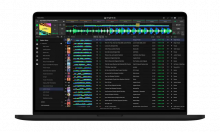
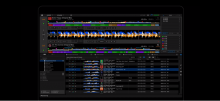
Engine DJ-desktop
Engine DJ has quietly become one of the most important DJ platforms of the last few years — not because it’s trying to replace “classic laptop DJing”, but because it’s built around a different idea: your DJ system should be able to perform without being tethered to a computer. At its core, Engine is a two-part platform: Engine DJ Desktop (Mac/Windows) for music library preparation Engine DJ OS running directly on supported standalone hardware That structure matters, because it shifts the performance workload away from a laptop and into the device itself. You prepare your library at home, export/sync it, and then show up to play with far fewer moving parts. The Engine DJ story (why it exists) Engine DJ grew out of Denon DJ’s push into standalone systems — the idea that a DJ controller can be more than a MIDI surface for a laptop. Over time it evolved into a complete embedded performance environment: waveform displays, beatgrids, analysis, FX, playlists, streaming integration, and now even stems-related workflows. A key modern turning point was Engine DJ 2.0 (Oct 2021), where the platform’s database and interface were rebuilt — and since then updates have arrived at a steady pace, adding performance tools, streaming partners, UI improvements, and deeper standalone capabilities. The unique value: no cable to a PC during performance For many DJs, Engine DJ’s biggest advantage is simple: you can play without a laptop cable. Engine DJ OS devices can analyse music directly on the unit (beatgrid/BPM/key/waveforms), manage playlists, set hot cues and loops, and perform with FX — all without requiring a computer to be running in the booth. This reduces setup time, reduces risk of computer issues, and makes a cleaner stage/booth workflow. That doesn’t mean “no prep” — it means the preparation happens before the gig on Engine DJ Desktop, then performance happens inside the device. Engine DJ Desktop: prep, portability, and serious library tools Engine DJ Desktop isn’t just a file exporter. It’s a full library preparation environment with: Playlists and playlist folders Search, filters and Smartlists Track preview Beatgrid editing Hot cue and loop preparation Metadata editing Backup and restore workflow One of the most practical features is library import: Engine DJ Desktop supports importing existing libraries from major DJ ecosystems, including rekordbox, Apple Music/iTunes, Serato DJ, and Traktor. That turns Engine into a realistic platform for DJs who already have years of playlists and prep work. Streaming + cloud: where Engine DJ really differentiates Engine DJ’s streaming story is tightly integrated into the standalone experience. The official Engine streaming page lists services including Apple Music, Amazon Music Unlimited, Beatport, Beatsource, SoundCloud Go+, TIDAL, plus Dropbox as a cloud source. Two points stand out: Streaming inside the standalone environment You can browse and load tracks directly on hardware, and Engine DJ OS supports analysis/performance tools without needing a laptop in the chain. Dropbox as a practical backup and portability tool Engine positions Dropbox as part of a modern cloud library workflow for standalone DJing, which is a big deal if you want redundancy or travel-friendly setups. What’s new in Engine DJ 5.0 Engine DJ 5.0 (announced mid-May 2026) is one of the most meaningful updates so far, because it pushes the platform deeper into “device-first” performance. Highlights from Engine’s official release announcement include: On-board stems rendering for RANE SYSTEM ONE (Engine calls it the first DJ hardware able to render stems without a computer) RGB waveforms across devices Track star ratings on hardware FX and performance refinements (including new beat lengths for certain FX behaviours) Desktop improvements including a guided Import Assistant for library migration Even if you never touch stems, Engine DJ 5 is still meaningful because it refines the day-to-day workflow: library management, waveform clarity, and speed of preparation. Supported hardware (Engine DJ OS ecosystem) Engine DJ OS is designed around a defined hardware ecosystem. The official compatibility list includes these families and models: RANE SYSTEM ONE Denon DJ PRIME GO+, PRIME 4+ SC LIVE 2, SC LIVE 4 SC6000 PRIME, SC6000M PRIME, LC6000 PRIME PRIME 4, PRIME 2, PRIME GO SC5000 PRIME, SC5000M PRIME Numark Mixstream Pro Go, Mixstream Pro+, Mixstream Pro This ecosystem focus is part of Engine DJ’s identity: it’s less about “support every controller ever made” and more about building a deeply integrated standalone platform.
Published on
-- Category --: Articles
-@ @Threads @-: @EngineDJ - @Denon - @Numark - @Rane

InMusic’s announced acquisition of Native Instruments and Traktor

Submitted by DJTOTYGEE on
Image
InMusic’s announced acquisition of Native Instruments and Traktor
On 8 May 2026, inMusic and Native Instruments announced a definitive agreement for inMusic to acquire Native Instruments. That timing matters, because Native Instruments had entered preliminary insolvency proceedings in Germany in January 2026, and in March 2026 CEO Nick Williams confirmed that the business was actively looking for new shareholders. The new deal is positioned as the solution to that process, with both companies saying the transaction is expected to close in the coming weeks, subject to customary closing conditions. The first thing to clear up is the most common confusion: this is not a Traktor-only acquisition. Officially, inMusic is acquiring the broader Native Instruments business, not just its DJ arm. The public statements specifically name Native Instruments, iZotope, Plugin Alliance and Brainworx as part of what continues under the new ownership. Read together with Native Instruments’ own corporate pages, that means the deal stretches across the wider NI ecosystem: Komplete, Kontakt, Maschine, Traktor, Reaktor, NKS, hardware, software and services. So if you were wondering whether inMusic only wanted Traktor, the answer from the available evidence is no. It is buying a much larger creative-tech portfolio. That also explains the strategic logic. Before this deal, inMusic was already a major music-tech owner with brands such as Akai Professional, Denon DJ, Numark, Rane, M-Audio, Moog, Engine DJ and SoundSwitch. Native Instruments brings something inMusic historically had less of at this scale: a deep, globally recognised software stack in production, DJing, mixing and mastering. The two companies had already been collaborating since 2025, bringing NKS integration to Akai and M-Audio controllers and NI sounds to MPC. The acquisition now turns that collaboration into ownership, and inMusic says the goal is to move faster, deepen integration and build better tools for creators. For Traktor users, the immediate implications are reassuring. Native Instruments’ official FAQ says nothing changes today: products, licences, downloads, subscriptions and support remain fully active. That is the clearest short-term takeaway. In the medium term, though, there is still no official Traktor roadmap under inMusic. We do not yet know whether this will simply stabilise Traktor, or whether it will lead to deeper links with inMusic’s wider DJ ecosystem around Denon DJ, Engine DJ and SoundSwitch. That possibility is obvious, but it remains an inference rather than an announced plan. As for the financial terms, the purchase price has not been disclosed. Trade reports from Mix and MusicTech both describe the amount as undisclosed, and the official press release also avoids stating a price. So if you are looking for a headline valuation, there is none on the public record yet. My own take is that this deal is both a lifeline and a signal. It is a lifeline because it gives Native Instruments a path out of a damaging insolvency process and offers users immediate continuity. But it is also a signal of further consolidation in music technology. CDM argues that adding Traktor gives inMusic a more credible counterweight to AlphaTheta in DJ, while MusicRadar notes the obvious downside of so many major brands sitting under one roof. For users, then, the right conclusion is probably cautious optimism: the immediate risk around support looks lower, but the long-term question is whether inMusic can turn continuity into renewed product momentum
Published on
-- Category --: Articles

Rekordbox in 2026: From USB Preparation Tool to Full DJ Ecosystem

Submitted by DJTOTYGEE on
Image
Rekordbox in 2026: From USB Preparation Tool to Full DJ Ecosystem
Few pieces of DJ software have shaped club culture as quietly and completely as Rekordbox. What began as a preparation tool for Pioneer DJ players has become an end-to-end platform for organising libraries, exporting USBs, performing with controllers, syncing across devices, and increasingly working with cloud and streaming workflows. That is why Rekordbox is no longer just “software before the gig” for many DJs; it has become the workflow itself. The story starts in 2009, when the CDJ-2000 and its companion Rekordbox software introduced a different way to DJ: preparing music on a computer, exporting it to USB, and arriving at a booth without wallets full of CDs or a complicated laptop setup. AlphaTheta’s own retrospective describes this as a major turning point driven by the need for a more reliable, preparation-to-performance workflow, one that covered home prep, club playback, and post-set review. Over time, Rekordbox moved far beyond simple track management. The software was rebuilt in-house in 2014, which helped define many of the browsing and library tools DJs still rely on today. In 2015, Performance Mode transformed Rekordbox from a preparation utility into full DJ software, especially when paired with dedicated hardware. Rekordbox 6 then pushed further into cloud workflows, and Rekordbox 7, released on 14 May 2024, refreshed the interface and browsing system while adding new workflow tools. Later point releases confirmed that development was still moving quickly: version 7.2.8 added 4-Stems support on 3 December 2025, and version 7.2.13 fixed the USB export issue that affected 7.2.12 in March 2026. At its foundation, Rekordbox remains a powerful music-management platform. The uploaded drafts were right to emphasise this. Track analysis, waveform preparation, BPM and key detection, cueing, looping, playlist organisation, beatgrid editing, tagging, and smart filtering are still the core reasons Rekordbox matters to working DJs. The software’s official manuals and feature pages continue to frame it around preparation and performance ease, not just flashy add-ons. One of Rekordbox’s biggest strengths is that it still serves two connected but distinct use cases. In Export Mode, it remains the standard preparation hub for DJs who perform on CDJ and XDJ systems from USB drives or SD cards. In Performance Mode, it becomes a full DJ application with decks, mixer sections, effects, loops, cue controls, beat jump, sampler functions, and controller integration. That dual identity is what makes it so durable: the same software can prepare a club USB workflow and also power a laptop-based controller set. Cloud Library Sync and Mobile Library Sync extend that idea across devices, while official guidance notes that CloudDirectPlay currently supports Dropbox. Rekordbox also stretches well beyond the basic two-deck picture. Depending on plan and hardware, the platform supports DVS workflows, video output, lighting control, editing, and newer performance tools such as STEMS. Official release notes for version 7.2.8 added a 4-Stems mode — vocal, instrumental, bass, and drums — while the Rekordbox 7 FAQ confirms that 3-Stems and 4-Stems switching is available in preferences and that hardware control can be mapped through MIDI LEARN. The same FAQ set also covers DVS control, supported DMX interfaces, and video-monitor behaviour, which reinforces the point that Rekordbox is now much closer to a broad DJ ecosystem than a simple library app. Hardware support is where Rekordbox becomes especially important. Rekordbox 7’s current Hardware Unlock list includes a wide spread of controllers, players, all-in-one systems, mixers, and interfaces. On the controller side alone, the official list includes the DDJ-GRV6, DDJ-1000, DDJ-800, DDJ-400, DDJ-200, DDJ-FLX10, DDJ-FLX6-GT, DDJ-FLX6, DDJ-FLX4, DDJ-FLX2, DDJ-REV7, DDJ-REV5, DDJ-WeGO4, and DDJ-XP2. The wider ecosystem also includes OPUS-QUAD, OMNIS-DUO, XDJ-AZ, XDJ-XZ, XDJ-RX3, XDJ-RX2, XDJ-RR, CDJ-3000X, CDJ-3000, PLX-CRSS12, DJM-V10, DJM-V10-LF, DJM-V5, DJM-A9, DJM-750MK2, DJM-450, DJM-250MK2, DJM-S11, DJM-S7, euphonia, INTERFACE 2, and RB-DMX1. That said, “supported by Rekordbox” is not always the same thing as “fully supported in the latest major version”. This is where the uploaded drafts needed the most reconciliation. AlphaTheta explicitly warns that some long-discontinued products are not guaranteed to work on Rekordbox 7, and it specifically states that the DDJ-RZX is not compatible with Rekordbox 7 and should be used with version 6 instead. That means legacy mentions from older drafts should always be treated as version-sensitive, not automatically current. So who is Rekordbox for today? In practice, it serves several groups at once: beginners learning on entry-level controllers, home users building controller-based performance rigs, club DJs exporting USBs for CDJ / XDJ booths, mobile DJs using lighting or video functions, and touring DJs who want continuity between preparation and performance. That breadth is exactly why the software remains central. The tools have become more cloud-connected and more feature-rich over time, but the basic promise has not changed: prepare once, arrive ready, and perform with confidence. Since pricing and plan structures move over time and vary by region and billing cycle, the safest long-term wording for a publishable article is to point readers to the official plan page rather than hard-code subscription numbers into evergreen copy. Current official hardware snapshot The current official Rekordbox 7 Hardware Unlock picture can be grouped like this. This section is intentionally more literal than the blog article above, so you have a clean support snapshot for reference. Controllers DDJ-GRV6, DDJ-1000, DDJ-800, DDJ-400, DDJ-200, DDJ-FLX10, DDJ-FLX6-GT, DDJ-FLX6, DDJ-FLX4, DDJ-FLX2, DDJ-REV7, DDJ-REV5, DDJ-WeGO4, DDJ-XP2. All-in-one systems OPUS-QUAD, OMNIS-DUO, XDJ-AZ, XDJ-XZ, XDJ-RX3, XDJ-RX2, XDJ-RR. Players and turntable CDJ-3000X, CDJ-3000, PLX-CRSS12. Mixers and interfaces DJM-V10, DJM-V10-LF, DJM-V5, DJM-A9, DJM-750MK2, DJM-450, DJM-250MK2, DJM-S11, DJM-S7, euphonia, INTERFACE 2, RB-DMX1. Compatibility caveat worth keeping in the article notes DDJ-RZX is not compatible with Rekordbox 7 and should be treated as a Rekordbox 6 case.
Published on
-- Category --: Articles
-@ @Threads @-: @Rekordbox

Serato in 2026 — A Practical, Analytical Guide to Its History, Features, Pricing, and Supported Hardware

Submitted by DJTOTYGEE on
Image
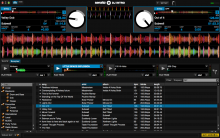
Serato
Serato: A brief history (why the milestones matter) Core features (what Serato does well) - Stems - DVS - Video and karaoke: - Streaming Licensing and pricing (what you pay for) Hardware support (the Serato approach) Serato’s strength is not a single “killer feature.” It is the combination of a long engineering lineage, a hardware-first performance philosophy, and a modern feature stack that includes Stems, streaming, DVS, and video. The 4.0 library rebuild matters because it targets the part of DJing that quietly costs the most time: organising, preparing, and reliably finding the next track under pressure.
Published on
-- Category --: Articles
-@ @Threads @-: @Serato

VirtualDJ: the long game (and why I’ve trusted it since 2018

Submitted by DJTOTYGEE on
Image
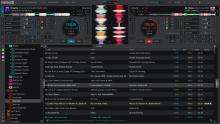
VirtualDJ
I’ve used VirtualDJ since 2018 and it’s become one of those tools I can truly “own”: I’ve built personal skins and custom controller mappings to match my workflow, and I’ve had consistently solid experiences with both the support team and the forum community. What’s exciting right now is how fast VirtualDJ’s core is evolving. VirtualDJ 2026 (Dec 2025 release) introduces lyrics-assisted waveforms, an AI “AIPrompt” folder for track ideas inside the browser, and a redesigned pro FX engine with 122+ effects—plus new karaoke/lyrics features. On the library side, CloudDrive supports syncing lists using providers like Dropbox, and VirtualDJ can read playlists/crates from major DJ ecosystems, making it much easier to move or rebuild a library without starting from zero.
Published on
-- Category --: Articles
-@ @Threads @-: @VirtualDJ

Native Instruments Faces Insolvency (Again) – Don’t Panic, DJs!

Submitted by DJTOTYGEE on
Image

What Happened? Native Instruments in Insolvency Proceedings

Native Instruments, the Berlin-based music tech company behind Traktor, Maschine, Kontakt and more, has entered preliminary insolvency proceedings in Germany. In plain terms, this means the company is undergoing a court-supervised financial restructuring – but importantly, this does not mean an immediate shutdown of NI’s operations. An administrator (Prof. Dr. Torsten Martini) has been appointed by a Berlin court to evaluate NI’s finances and oversee restructuring efforts.

Published on
-- Category --: Articles
-@ @Threads @-: @NativeInstruments - @Traktor

Alphatheta CDJ-3000 / CDJ-3000X vs Denon SC6000 / SC6000M

Submitted by DJTOTYGEE on
Image
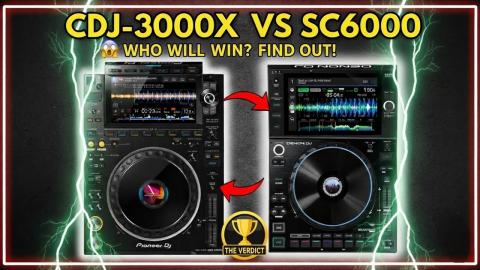
Alphatheta CDJ-3000 / CDJ-3000X vs Denon SC6000 / SC6000M

Two Different Visions of the Future DJ Booth — Which One Wins?

The DJ industry is at a crossroads.

Published on
-- Category --: Articles
-@ @Threads @-: @Denon - @AlphaTheta
Subscribe to Articles

Other websites: DRAGOSSIDO - DRAGOSSIDO ACADEMY - IO-HO

Developed by IO-HO - Template by IO-HO

Copyrights by DJ TOTY GEE © 1992 - 2026 ©

 My Wishlist