


Ferrari’s Electric Transition: Strategic Vision — and a useful lesson for DJs
Image
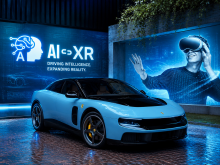
A silent Ferrari might sound like a contradiction — but it’s also a strategic statement.
The Luce signals that electrification isn’t optional; it’s positioning in a market that won’t wait.
It’s not about abandoning heritage, but defending relevance before disruption makes the decision for you.
Ferrari’s first fully electric vehicle, widely referred to as the Luce, has sparked a familiar kind of debate: can a brand built on combustion drama translate its emotional identity into an electric era? The initial reaction has been mixed, with enthusiasts questioning the loss of the “roar” and investors reacting nervously in the short term.
But the more interesting story isn’t panic — it’s positioning.
Ferrari is innovating early, not reacting late
Ferrari’s electrification isn’t a sudden swerve. It’s part of a longer arc in performance engineering and luxury positioning, with the Luce functioning as a high-profile statement about where Ferrari wants to compete next.
The wider lesson is familiar: market leadership does not guarantee future relevance.
Kodak invented early digital camera technology but hesitated to disrupt its film business — then the market moved without it.
Nokia dominated mobile phones, but underestimated the shift towards software ecosystems after the iPhone.
Blockbuster is another brutal case study: in 2000, Netflix’s founders approached Blockbuster with a proposal that would have effectively brought Netflix under Blockbuster’s umbrella (famously valuing Netflix around $50 million). Blockbuster declined — and within a decade the market had flipped.
These examples aren’t perfect parallels, but they share a pattern: when disruption arrives, the biggest risk is rarely innovation — it’s inertia, and the belief that the old advantage will protect you forever.
Ferrari, whether you love the idea or not, is choosing the opposite stance: move early, learn fast, and shape the narrative while it still can.
The bigger issue: nightlife and DJ culture may be next
This is where I think the conversation becomes urgent for the creative industries — especially DJs and venues.
I’m increasingly convinced the traditional nightclub, as a physical-only format, is slowly becoming obsolete. Not because people don’t want to dance together, but because the definition of together is expanding.
The next “club” could be:
A hybrid venue with an XR layer
A physical crowd plus a virtual crowd attending through XR/VR
Interactive visuals and world-building that changes with the music
Remote guest DJs, virtual stages, avatar participation
A venue that’s also a digital destination (not just a postcode)
Or a fully XR/VR club experience
A persistent “club world” that exists every weekend
Global communities that treat virtual nights as real culture (because, to them, they are)
New forms of performance where DJs are also environment designers (spatial audio, interactive lighting, immersive staging)
This isn’t sci-fi anymore — it’s already happening in fragments. What’s missing is the infrastructure that makes it scalable and professional.
The problem: licensing has not caught up to XR/VR performance
Rights still apply. The gap isn’t copyright — it’s clarity.
Traditional licensing frameworks are built around:
physical venues and regulated entertainment models
public performance permissions for recorded music
streaming/broadcast models for online usage
But an XR/VR event doesn’t fit neatly into any single box — especially when it’s:
interactive
immersive (spatial audio, world visuals)
international by default
part physical / part virtual
Right now, there isn’t a widely understood, standard “XR club performance licence” that event organisers can confidently point to and say:
“This covers a virtual venue, avatar attendance, immersive audio/visual environments, and hybrid audiences — end to end.”
That uncertainty is the real bottleneck. It slows investment, scares organisers, and discourages experimentation — even when the technology is ready.
Conclusion
Ferrari’s EV move is not a cautionary tale — it’s a case study in choosing innovation before you’re forced to. The cautionary tales are Kodak, Nokia and Blockbuster: the giants who waited until the future was no longer optional.
Nightlife faces a similar fork in the road. The “club” of the future may not be defined by a building — but by an experience layer: sometimes physical, sometimes XR, sometimes fully virtual.
If that’s where the scene is heading, the music industry needs to do one thing urgently:
Create clear, practical licensing pathways for immersive XR/VR performances — so creators can build the future without operating in a grey zone.
Published on
-- Category --:
Articles
-- Tags --:
Ferrari -
Electric vehicles -
Innovation strategy -
Brand evolution -
Nightlife -
DJs -
XR -
VR -
Virtual events -
Music licensing -
Creative industries -
Future of venues