


Rekordbox in 2026: From USB Preparation Tool to Full DJ Ecosystem
Image
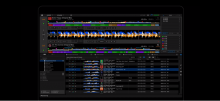
Few pieces of DJ software have shaped club culture as quietly and completely as Rekordbox. What began as a preparation tool for Pioneer DJ players has become an end-to-end platform for organising libraries, exporting USBs, performing with controllers, syncing across devices, and increasingly working with cloud and streaming workflows. That is why Rekordbox is no longer just “software before the gig” for many DJs; it has become the workflow itself.
The story starts in 2009, when the CDJ-2000 and its companion Rekordbox software introduced a different way to DJ: preparing music on a computer, exporting it to USB, and arriving at a booth without wallets full of CDs or a complicated laptop setup. AlphaTheta’s own retrospective describes this as a major turning point driven by the need for a more reliable, preparation-to-performance workflow, one that covered home prep, club playback, and post-set review.
Over time, Rekordbox moved far beyond simple track management. The software was rebuilt in-house in 2014, which helped define many of the browsing and library tools DJs still rely on today. In 2015, Performance Mode transformed Rekordbox from a preparation utility into full DJ software, especially when paired with dedicated hardware. Rekordbox 6 then pushed further into cloud workflows, and Rekordbox 7, released on 14 May 2024, refreshed the interface and browsing system while adding new workflow tools. Later point releases confirmed that development was still moving quickly: version 7.2.8 added 4-Stems support on 3 December 2025, and version 7.2.13 fixed the USB export issue that affected 7.2.12 in March 2026.
At its foundation, Rekordbox remains a powerful music-management platform. The uploaded drafts were right to emphasise this. Track analysis, waveform preparation, BPM and key detection, cueing, looping, playlist organisation, beatgrid editing, tagging, and smart filtering are still the core reasons Rekordbox matters to working DJs. The software’s official manuals and feature pages continue to frame it around preparation and performance ease, not just flashy add-ons.
One of Rekordbox’s biggest strengths is that it still serves two connected but distinct use cases. In Export Mode, it remains the standard preparation hub for DJs who perform on CDJ and XDJ systems from USB drives or SD cards. In Performance Mode, it becomes a full DJ application with decks, mixer sections, effects, loops, cue controls, beat jump, sampler functions, and controller integration. That dual identity is what makes it so durable: the same software can prepare a club USB workflow and also power a laptop-based controller set. Cloud Library Sync and Mobile Library Sync extend that idea across devices, while official guidance notes that CloudDirectPlay currently supports Dropbox.
Rekordbox also stretches well beyond the basic two-deck picture. Depending on plan and hardware, the platform supports DVS workflows, video output, lighting control, editing, and newer performance tools such as STEMS. Official release notes for version 7.2.8 added a 4-Stems mode — vocal, instrumental, bass, and drums — while the Rekordbox 7 FAQ confirms that 3-Stems and 4-Stems switching is available in preferences and that hardware control can be mapped through MIDI LEARN. The same FAQ set also covers DVS control, supported DMX interfaces, and video-monitor behaviour, which reinforces the point that Rekordbox is now much closer to a broad DJ ecosystem than a simple library app.
Hardware support is where Rekordbox becomes especially important. Rekordbox 7’s current Hardware Unlock list includes a wide spread of controllers, players, all-in-one systems, mixers, and interfaces. On the controller side alone, the official list includes the DDJ-GRV6, DDJ-1000, DDJ-800, DDJ-400, DDJ-200, DDJ-FLX10, DDJ-FLX6-GT, DDJ-FLX6, DDJ-FLX4, DDJ-FLX2, DDJ-REV7, DDJ-REV5, DDJ-WeGO4, and DDJ-XP2. The wider ecosystem also includes OPUS-QUAD, OMNIS-DUO, XDJ-AZ, XDJ-XZ, XDJ-RX3, XDJ-RX2, XDJ-RR, CDJ-3000X, CDJ-3000, PLX-CRSS12, DJM-V10, DJM-V10-LF, DJM-V5, DJM-A9, DJM-750MK2, DJM-450, DJM-250MK2, DJM-S11, DJM-S7, euphonia, INTERFACE 2, and RB-DMX1.
That said, “supported by Rekordbox” is not always the same thing as “fully supported in the latest major version”. This is where the uploaded drafts needed the most reconciliation. AlphaTheta explicitly warns that some long-discontinued products are not guaranteed to work on Rekordbox 7, and it specifically states that the DDJ-RZX is not compatible with Rekordbox 7 and should be used with version 6 instead. That means legacy mentions from older drafts should always be treated as version-sensitive, not automatically current.
So who is Rekordbox for today? In practice, it serves several groups at once: beginners learning on entry-level controllers, home users building controller-based performance rigs, club DJs exporting USBs for CDJ / XDJ booths, mobile DJs using lighting or video functions, and touring DJs who want continuity between preparation and performance. That breadth is exactly why the software remains central. The tools have become more cloud-connected and more feature-rich over time, but the basic promise has not changed: prepare once, arrive ready, and perform with confidence. Since pricing and plan structures move over time and vary by region and billing cycle, the safest long-term wording for a publishable article is to point readers to the official plan page rather than hard-code subscription numbers into evergreen copy.
Current official hardware snapshot
The current official Rekordbox 7 Hardware Unlock picture can be grouped like this. This section is intentionally more literal than the blog article above, so you have a clean support snapshot for reference.
Controllers
DDJ-GRV6, DDJ-1000, DDJ-800, DDJ-400, DDJ-200, DDJ-FLX10, DDJ-FLX6-GT, DDJ-FLX6, DDJ-FLX4, DDJ-FLX2, DDJ-REV7, DDJ-REV5, DDJ-WeGO4, DDJ-XP2.
All-in-one systems
OPUS-QUAD, OMNIS-DUO, XDJ-AZ, XDJ-XZ, XDJ-RX3, XDJ-RX2, XDJ-RR.
Players and turntable
CDJ-3000X, CDJ-3000, PLX-CRSS12.
Mixers and interfaces
DJM-V10, DJM-V10-LF, DJM-V5, DJM-A9, DJM-750MK2, DJM-450, DJM-250MK2, DJM-S11, DJM-S7, euphonia, INTERFACE 2, RB-DMX1.
Compatibility caveat worth keeping in the article notes
DDJ-RZX is not compatible with Rekordbox 7 and should be treated as a Rekordbox 6 case.
Published on
-- Category --:
Articles
-@ @Threads @-:
@Rekordbox
-- Tags --:
DJGear -
DJTechnology -
ProAudio -
ClubDJ -
DigitalDJing -
DJLife -
DJSetup -
DJTips -
GearReview -
DJComparison -
ClubCulture
-# Hashtag #-:
#DJGear -
#DJTechnology -
#ProAudio -
#ClubDJ -
#DigitalDJing -
#DJLife -
#DJSetup -
#DJTips -
#GearReview -
#DJComparison -
#ClubCulture